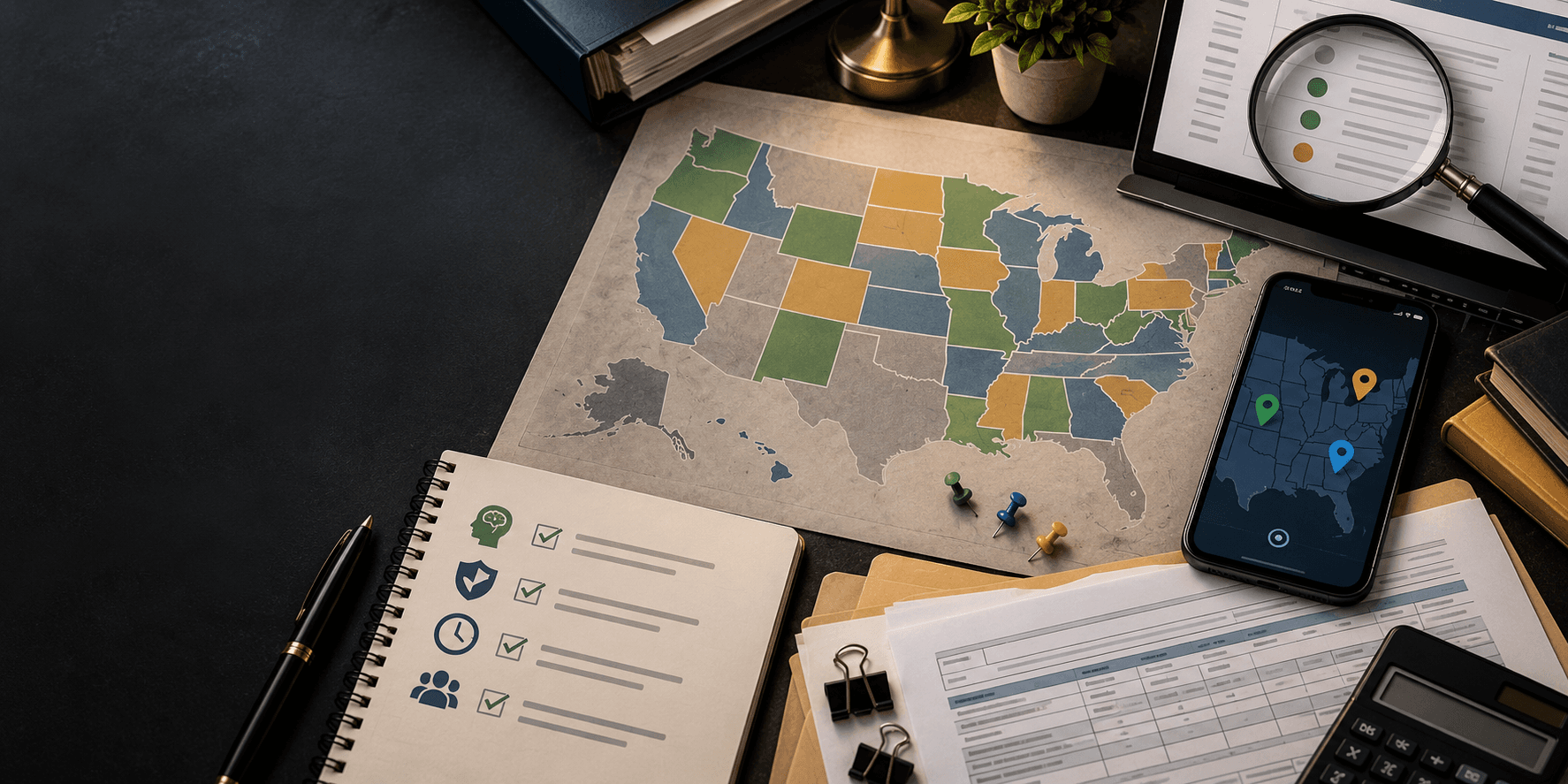
Why a state-by-state answer is harder than a listicle
The United States does not have one national online-casino license that makes a site legal everywhere. A state can authorize casino-style games, poker, sports betting, lottery products, tribal platforms, or none of those — and it can use a different regulator and consumer-protection process for each.
Even inside a legal market, the public brand may not be the entity that holds the casino relationship. New Jersey, for example, describes internet gaming affiliates licensed to own or operate an internet gaming system on behalf of a licensed casino. Pennsylvania and Michigan publish their own operator or provider information. The brand name is a starting clue, not the conclusion.
U.S. starter map
The regulator changes with the state
Michigan
Regulated iGamingMGCB publishes authorized online gaming and sports-betting platform providers. The board has also been actively warning against unlicensed sites.
MGCB provider list →Pennsylvania
Regulated iGamingThe PGCB oversees online casino-type gaming and publishes operator and license information. Verify the site against the Board, not only a brand logo.
PGCB gaming overview →New Jersey
Regulated internet gamingThe Casino Control Commission licenses casinos and internet gaming affiliates; approved skins and casino relationships matter when checking a brand.
NJ license information →Every other state
Verify separatelyA neighboring state’s legal market does not answer your state’s question. Start with the state regulator and the exact activity: casino, poker, sportsbook, lottery, or sweepstakes.
Read the safety baseline →The verification sequence that works across states
- Name the activity. “Online gambling” is too broad. Ask whether you mean slots and table games, poker, sports betting, horse racing, a lottery product, or a sweepstakes site.
- Open the state regulator. Search for the state agency’s authorized operator, licensee, or internet-gaming page. Avoid using a search result that only points to an affiliate ranking page.
- Match the exact domain. A legal brand can operate a different domain by state. Check the website, app, and operator name against the regulator’s own link or list.
- Check the casino relationship. Some states tie online gaming to a commercial casino, racetrack, or tribal operator. A platform provider and a license holder are not necessarily the same entity.
- Test the location boundary. Legal online gaming usually requires geolocation inside the state. A VPN, a neighboring state, or a “works from anywhere” claim should stop the sign-up process.
- Read the cashout terms. Find identity checks, payment ownership, minimums, limits, fees, pending-review language, and bonus lockups before you fund the account.
- Save the evidence. Keep the terms version, promotion rules, deposit receipt, support ticket, and withdrawal status. If something goes wrong, a screenshot is more useful than memory.
Long-tail questions are better player questions
The next state pages on SafeCasino will be built around the questions that appear after the first click — the questions that generic “best online casinos” pages tend to ignore:
- Is online casino legal in Michigan, and how do I confirm a site is on the MGCB list?
- Is online casino legal in Pennsylvania, and why does the casino brand differ from the license holder?
- Is online casino legal in New Jersey, and what does “internet gaming affiliate” mean?
- Why is a legal casino asking for my Social Security number or identity documents?
- Can I withdraw while a casino bonus is active, and which terms control the balance?
- What is a W-2G, and do I report gambling winnings even if I never receive one?
Start with the deep state guides for Michigan, Pennsylvania, and New Jersey. For the mechanics that apply in every state, keep the license guide, Terms Checklist, and Withdrawal Reality Check nearby.
Taxes: separate the reporting question from the license question
A legal state market does not make gambling winnings tax-free. The IRS says gambling winnings are generally taxable and must be reported, whether or not a payer gives you a reporting form. The 2026 Form W-2G instructions also changed the federal reporting threshold for certain payments to $2,000, while withholding rules depend on the game, payout, ratio, and other conditions.
That is a federal baseline, not a state-specific tax answer. Keep a complete win/loss record and speak with a qualified tax professional for your situation. Do not use a W-2G threshold as a personal “tax-free limit.”
What we will not do with state pages
- Use one state’s license to imply nationwide legality.
- Call an offshore site “legal” because it accepts a U.S. ZIP code.
- Copy a bonus number without the current state and product terms.
- Turn a regulator’s authorized list into a promise about payout speed.
- Hide the difference between a casino operator, platform provider, affiliate, and brand.
That editorial standard is slower, but it produces pages a person can use when the question is consequential: “Is this site allowed to serve me here, and what happens if my withdrawal is held?”